Discover top-rated 3-tier wooden hamster cages designed to keep hamsters, mice, and other small pets active and safe. This guide highlights durable builds, multi-level layouts, natural wood aesthetics, and easy cleaning features to help you choose the right habitat for your furry friend.
| Product | Brand | Key Features |
|---|---|---|
| PawHut 3-Tier Wooden Hamster Cage Mice and Rat Cage Small Animals Hutch with Openable Top | PawHut | Five platforms; ventilation; shatter-resistant plexiglass; storage shelf |
| PawHut Wooden Hamster Cage, 3 Tier Small Animal Cage with Detachable Lower Floor | PawHut | Two ramps; detachable middle layers; large front door; included accessories |
| PawHut Wooden Hamster Cage, 3 Tier Small Animal Cage with Detachable 12.6″ Deep Bottom | PawHut | Deep bottom; detachable layers; hut, seesaw, wheel |
| PawHut 3-Tier Wooden Hamster Cage Mice and Rat Cage Small Animals Hutch with Openable Top, Front Door, Storage Shelf, Gray | PawHut | Ventilated roof; front access; fir wood construction; storage shelf |
| Wooden Hamster Cage, Guinea Pig Cages, 3 Tier Enclosure with Detachable Bottom | Anwick | Three layers; detachable bottom; accessories; sturdy wood |
PawHut 3-Tier Wooden Hamster Cage Mice and Rat Cage Small Animals Hutch
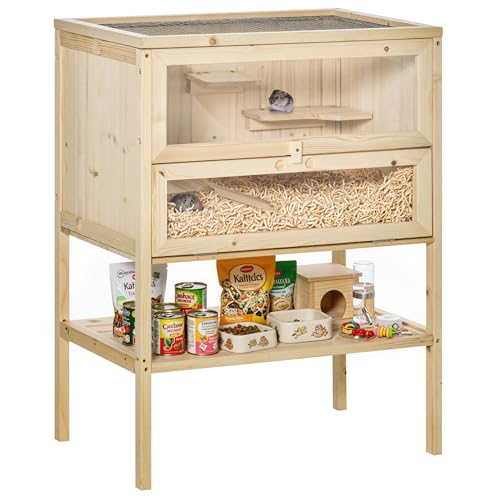
Designed for multi-level activity, this PawHut cage provides five platforms and ladders that promote exploration, climbing, and rest in a compact footprint. The natural fir wood construction adds durability while keeping a warm, home-like appearance. A galvanized wire roof ensures proper ventilation, and the plexiglass window offers a clear view for owners to monitor their pets. The bottom shelf enables convenient storage of food and supplies, helping maintain a tidy habitat. The openable top and front access doors simplify cleaning and routine maintenance, which is essential for small animal households with active pets. This model suits hamsters, mice, and gerbils seeking a stimulating environment that still fits inside a typical room corner.
Key considerations:
– Five platforms create distinct zones for climbing, lounging, and feeding.
– Ventilation is balanced with a protective roof; ensure placement away from direct sunlight and drafts.
– Assembly involves multiple pieces; consider setting aside extra time or a helper.
– Safe materials and shatter-resistant elements reduce risk during play and exploration.
PawHut Wooden Hamster Cage, 3 Tier Small Animal Cage with Detachable Lower Floor
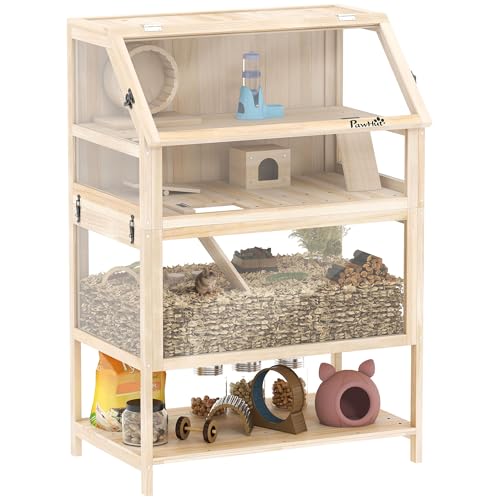
This PawHut model focuses on practical everyday use with two wooden ramps linking three levels to encourage natural climbing and exploration. It’s well-suited for dwarf hamsters or gerbils, offering separate zones for rest, play, and eating. The detachable middle layers simplify cleaning, while the large 80 cm front door provides full interior access for quick bedding changes and spot-cleaning. Included accessories—seesaw, ramp, exercise wheel, and a cozy hut—promote physical activity and mental engagement, reducing boredom. The sturdy wood construction supports long-term use in busy households.
Key considerations:
– Detachable layers streamline maintenance but verify door latches are secure for energetic pets.
– The front access door should be paired with safe, chew-resistant materials.
– Multiple accessories add value but require space for arrangement.
– Ensure the mesh and wood joints stay tight after cleaning to prevent squeaks or gaps.
PawHut Wooden Hamster Cage, 3 Tier Small Animal Cage with Detachable 12.6″ Deep Bottom
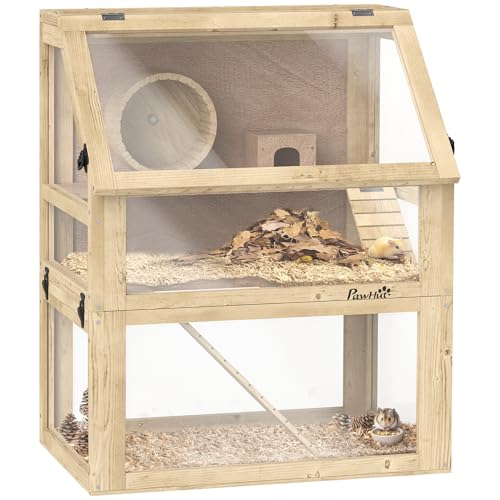
This three-tier design emphasizes a deep bottom area, ideal for digging and natural exploration. The 12.6″ deep bottom supports more substrate and enrichment opportunities, helping small pets exhibit instinctual behaviors. The included seesaw, ramp, exercise wheel, and hut offer immediate enrichment upon assembly, reducing the need for extra purchases. Buckled detachments on the middle layers allow for quick access to different sections, making maintenance straightforward. The large front opening facilitates thorough cleaning and bedding changes with minimal hassle.
Key considerations:
– Deep bottom keeps substrate contained; check for any trim gaps where bedding could escape.
– Access points should be wide enough for easy maintenance without stressing shy pets.
– The overall footprint should align with your available space.
– Regular checks on wood finish and joints prevent wear over time.
PawHut 3-Tier Wooden Hamster Cage Mice and Rat Cage Small Animals Hutch (Gray)

This variant mirrors the multi-platform idea with five levels and ladders, delivering ample space for exercise and exploration across a compact footprint. The galvanized wire top and solid fir wood construction provide a sturdy, ventilated habitat suitable for hamsters, mice, and gerbils. A front door and convenient storage shelf streamline routine care, feeding, and equipment organization. The gray finish offers a contemporary look that blends with most interiors while maintaining a warm wood tone inside the living space.
Key considerations:
– Ventilation must be balanced with a protective design to prevent drafts.
– Front access doors should be tested for smooth operation to avoid sudden escapes.
– Finish and wood quality influence durability; inspect for splinters after cleaning.
– Consider whether extra platforms align with your pet’s activity level.
Wooden Hamster Cage, Guinea Pig Cages, 3 Tier Enclosure with Detachable Bottom

From Anwick, this three-tier enclosure emphasizes a detachable bottom and sturdy wood construction, offering a reliable habitat for hamsters, guinea pigs, and other small pets. The multi-layer layout encourages active play while providing distinct zones for digging, resting, and feeding. Included accessories—hut, seesaw, and exercise wheel—increase physical activity and mental stimulation. The design aims for long-term durability in homes with multiple pets or frequent household activity, ensuring easy access for cleaning and routine maintenance.
Key considerations:
– Detachable bottom facilitates cleaning; ensure seals around joints stay secure.
– Accessories can be rearranged to suit your pet’s preferences.
– Wood quality and finish determine resistance to chewing and wear.
– Size and weight support should match your pet’s species and behavior.
Buying Guide: Key Purchase Considerations
When evaluating 3-tier wooden hamster cages, consider space, materials, access, and enrichment. Durability matters: look for sturdy fir wood or similar natural materials, and verify that joints and fasteners are robust. A ventilated mesh roof helps airflow, but ensure it’s safe and resistance to chewing. Large front doors and openable tops simplify cleaning and daily care, especially for habitats with multiple levels.
Enrichment is vital for small pets. Look for built-in accessories like seesaws, huts, ramps, and wheels that promote exercise and mental stimulation. Multi-level layouts should provide clear zones for sleeping, playing, and feeding to prevent litter spread and stress. Substrate depth and bottom design affect digging behavior and cleanliness; deeper bottoms reduce bedding escape and odor but require stronger containment.
Maintenance considerations include detachable floors and buckled sections for quick cleaning, front openings for thorough access, and smooth surfaces that minimize snagging or splinters. For households with limited space, measure the cage footprint to ensure it fits your room while still offering ample room for your pet’s movement. Finally, verify that the product complies with safety standards and uses pet-safe finishes to avoid chemical exposure.
For buyers seeking a balance of aesthetics, durability, and activity, these 3-tier wooden cages provide versatile habitats that can adapt to hamsters, mice, gerbils, and even guinea pigs with some layout adjustments. By prioritizing ventilation, accessibility, and enrichment, you can create an engaging home that supports healthy behaviors and long-term pet wellbeing.