Maintaining optimal dissolved oxygen (DO) levels is essential for healthy fish, beneficial bacteria, and overall reef or freshwater ecosystem balance. This guide reviews top aquarium oxygen test kits and DO meters to help hobbyists choose reliable tools for home aquariums, ponds, and aquaculture. Each option is evaluated for accuracy, ease of use, and versatility across water types.
| Product | Type | Best For | Key Benefit |
|---|---|---|---|
| Monitor DISSOLVED Oxygen Test KIT (60 Tests) | DO Test Kit | Freshwater & Marine, Aquaculture | Simple, range-based DO testing |
| GIDIGI Digital DO Meter with ATC | Digital DO Meter | Home aquariums, ponds, labs | Two modes, ATC, Bluetooth data share |
| YINMIK Dissolved Oxygen Meter | Digital DO Meter | Ponds, Aquaculture | 0.1 mg/L resolution, long probe cable |
| EZTOCH Portable DO Meter | Digital DO Meter | Ponds, Hydroponics | Compact, battery-powered, 3.6 ft probe |
| GIDIGI Dissolved Oxygen Meter (ATC, 9.84 ft cable) | Digital DO Meter | Aquariums & Aquaculture | ATC, long cable, Bluetooth app |
Monitor DISSOLVED Oxygen Test KIT (60 Tests)

The Monitor DISSOLVED Oxygen Test KIT provides a straightforward method to measure DO levels within 0–15 ppm, offering a 0.5 ppm resolution. It is suitable for freshwater and marine aquariums, as well as aquaculture, ponds, groundwater, and even drinking water scenarios. This kit emphasizes ease of use for routine DO checks, supporting ongoing monitoring to prevent stress or mortality caused by low oxygen in varying water conditions.
Key features include a measurable DO range tailored to hobbyist needs, compatibility with multiple water environments, and a clear resolution that makes trend tracking practical. While it covers essential DO testing, users should complement it with periodic calibration checks and ensure glassware or reagents are stored properly to maintain accuracy over time.
GIDIGI Digital DO Meter with ATC

This GIDIGI DO meter offers two meaningful modes: mg/L and percentage saturation, with automatic temperature compensation (ATC). A 3-meter probe cable enables testing deeper water or larger tanks without repositioning the meter. The integration with a smartphone app via Bluetooth further enhances data management, storage, and sharing of test results. This makes it suitable for serious hobbyists, home laboratories, and environmental monitoring.
Practical notes include the need to verify battery life and ensure the probe is properly cleaned after each use to maintain sensor longevity. The Bluetooth data features are advantageous for recording long-term trends, though users should be mindful of potential connectivity interruptions in crowded wireless environments.
YINMIK Dissolved Oxygen Meter

YINMIK provides a dual-mode DO meter with mg/L and % saturation readings and includes a 9.84-foot probe cable for testing in larger or hard-to-reach tanks. It supports a temperature readout, which helps interpret DO values more accurately in environments where fish and microbial activity fluctuate with temperature. The device targets aquaculture, koi ponds, and brewery or hydroponic applications where precise DO management matters.
With a 0.1 mg/L resolution, it offers precise measurements suitable for detecting subtle changes in oxygen availability. Users should calibrate per manufacturer guidelines and store the probe properly to preserve accuracy. The long probe is particularly helpful for outdoor or larger systems where direct access is limited.
EZTOCH Portable DO Meter

EZTOCH offers a compact, battery-powered dissolved oxygen meter with a 3.6-foot probe cable. It measures DO in mg/L and percentage saturation, covering a practical range for ponds, fish tanks, and hydroponics. The kit’s bundled calibration solutions and membranes add convenience for initial setup and ongoing testing. This meter balances portability with reliable data for hobbyists who relocate between tanks or test in various environments.
Considerations include ensuring proper calibration and battery readiness for field usage. The included calibration solutions are helpful for first-time use, but ongoing maintenance is required to sustain measurement accuracy. Its portability makes it appealing for hobbyists managing multiple systems or educational demonstrations.
GIDIGI DO Meter with ATC and 9.84 ft Cable
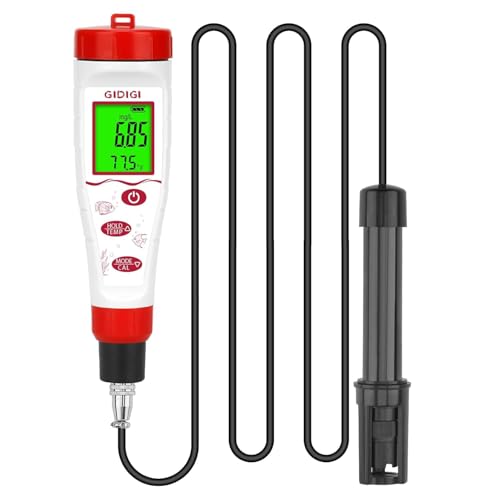
This GIDIGI model combines ATC with a long 9.84-foot probe cable, enabling testing in larger systems or in situations where direct probe access is challenging. The device provides mg/L and % DO readings, Bluetooth app connectivity for data management, and compensation options for salinity and altitude, which helps aquarium keepers sustaining brackish or marine environments. It is suitable for professional-grade hobbyists, breeders, and educational settings.
Buying Guide: Key DO Testing Considerations
- Measurement mode and units: Do meters commonly provide mg/L and % saturation. Choose a device that suits your system’s needs, especially if you work with brackish or marine water where salinity compensation matters.
- Probe length and accessibility: Longer cables help when testing large tanks, ponds, or outdoor installations. Ensure the probe material resists fouling and is compatible with your water type.
- Temperature compensation: Automatic temperature compensation (ATC) improves accuracy as water temperature fluctuates. For outdoor or variable environments, ATC is highly beneficial.
- Calibration and maintenance: Regular calibration with standard solutions is essential for accuracy. Check included calibration materials and the ease of recalibration in your chosen kit.
- Data management: Bluetooth or app-enabled meters offer convenient data logging, trend analysis, and sharing. Consider whether you need digital records for monitoring over time.
- Multi-parameter testing: Some DO meters are part of a broader water-testing setup (pH, ammonia, nitrite, nitrate). If you need a broader profile, consider integrated kits.
- Durability and ease of use: For hobbyists, a straightforward user interface, quick results, and durable probes improve reliability and reduce maintenance time.
Overall, the best DO testing solution depends on your specific setup. For simple, at-a-glance checks in smaller tanks, a DO test kit can be sufficient. For ongoing monitoring, larger systems, or environments with significant temperature or salinity variation, digital DO meters with ATC and data connectivity provide more robust insights and long-term value.