For healthy, lush aquarium plants, providing a reliable source of carbon is essential. This guide reviews five effective CO2 options—from liquid carbon boosters to tablet diffusers and drop-checkers—helping hobbyists choose the right fit for their planted tanks. All products come from reputable brands and are popular among American hobbyists seeking consistent plant growth and balanced aquarium chemistry.
Summary Table of Selected Products
| Product | Brand | What It Offers |
|---|---|---|
| API Co2 Booster Freshwater Aquarium Plant Treatment 8 Fl oz Bottle | API | Liquid carbon booster for freshwater plants |
| Seachem Flourish Excel 500 ml | Seachem | Bioavailable organic carbon with iron-related benefits |
| Pawfly Glass CO2 Drop Checker | Pawfly | CO2 indicator to visually monitor levels |
| 120 PCS CO2 Tablet Diffuser Tablets | Brrnoo | Tablets that dissolve to release CO2 |
| Fzone 2.5 L Aquarium CO2 Generator Kit | FZONE | DIY CO2 system with regulator and needle valve |
API Co2 Booster Freshwater Aquarium Plant Treatment 8 Fl oz Bottle
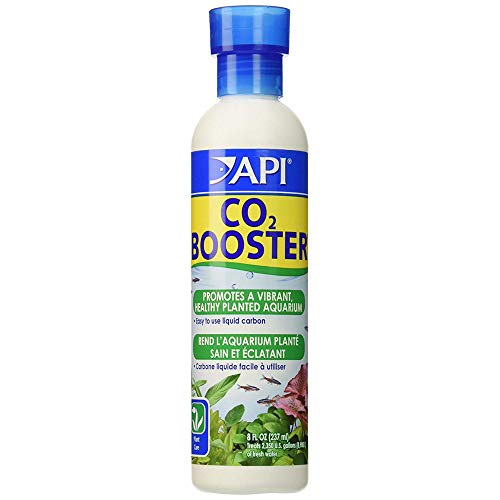
- Brand: API
- Type: Liquid carbon booster for freshwater aquariums
- Uses: Adds carbon in a form plants can absorb from the water
API CO2 Booster is a liquid carbon supplement designed to provide a readily absorbable carbon source for aquatic plants. It supports photosynthesis and growth without requiring complex equipment. Regular dosing can help maintain consistent plant health in low-tech setups or tanks with moderate lighting. Users should monitor plant response and avoid overdosing by following label instructions. The product is widely used in community tanks and can pair well with other fertilization regimens in planted aquariums.
Seachem Flourish Excel 500 ml

- Brand: Seachem
- Type: Organic carbon source for planted aquariums
- Key ideas: Provides bioavailable carbon; supports photosynthesis and overall plant health
Flourish Excel delivers organic carbon in a convenient liquid form, useful for tanks without CO2 injection. It also features iron-reducing properties that promote the ferrous state of iron, which plants utilize more easily. For beginners and experienced hobbyists alike, Excel can supplement carbon when DIY CO2 systems are impractical. It complements fertilization plans by supplying carbon intermediates that support growth, though it should not replace a full CO2 system in heavily planted, high-light tanks.
Pawfly Glass CO2 Drop Checker for Aquarium CO2 Indicator

- Brand: Pawfly
- Type: CO2 indicator monitor kit
- Includes: Reagent solution, tubing, suction cups
The drop-checker provides a visual indication of CO2 balance in a planted aquarium. After preparing the reagent, 20 drops are added to the tubing, and the color indicates conditions: green means balanced, yellow signals excess CO2, and blue suggests insufficiency. This tool helps hobbyists fine-tune CO2 dosing, reducing guesswork. It’s compatible with various tank sizes and works best in combination with a steady dosing plan using liquid carbon or solid CO2 sources.
120 PCS CO2 Tablet Diffuser Tablets

- Brand: Brrnoo
- Type: CO2 diffuser tablets
- Usage: Dissolve to release CO2 gradually
CO2 tablets offer a simple, low-maintenance way to boost CO2 availability in smaller or mid-sized planted tanks. Tablets dissolve slowly, helping maintain a stable CO2 level and supporting photosynthesis without requiring pressurized gas systems. While effective for many setups, tablet performance can vary with tank size, water movement, and substrate. They pair well with liquid carbon boosters or Excel-based fertilization when aiming for stronger plant growth in moderate-light aquariums.
Fzone 2.5 L Aquarium CO2 Generator Kit

- Brand: FZONE
- Type: DIY CO2 generator kit with regulator and needle valve
- Notes: Includes thick stainless bottle, regulator, valve, and bubble counter
The Fzone CO2 generator kit provides a complete DIY solution suitable for larger tanks or users seeking precise CO2 control. The kit’s thicker stainless bottle supports longer use between refills, and the precision needle valve allows fine adjustments to CO2 output. A built-in safety valve helps prevent over-pressurization. This option requires careful setup and ongoing maintenance but offers robust, long-term CO2 delivery for high-demand plant tanks and serious aquarists.
Buying Guide: Key Considerations For CO2 In Planted Aquariums
- Tank size and lighting: High-light, densely planted tanks benefit from steadier CO2 delivery, while low-tech setups may suffice with liquid carbon boosters or tablets.
- Delivery method: Liquid carbon boosters and Excel provide convenient supplementation; drop-checkers help monitor CO2 balance; diffuser tablets offer a simple release mechanism; DIY kits provide large-scale control for bigger tanks.
- Maintenance and cost: Liquid products require regular dosing; tablets have periodic replacement; DIY kits involve more setup but can be cost-effective in the long term.
- Plant types and growth goals: Fast-growing foreground species demand more carbon; slow growers may thrive with moderate dosing and monitoring.
- Monitoring tools: Pair CO2 sources with drop-checkers or pH/KH monitoring to avoid instability that harms livestock or plants.
- Compatibility: Ensure compatibility with existing fertilizers and micronutrients to avoid nutrient imbalances or phytotoxicity.
SUMMARY: When choosing CO2 options for a planted aquarium, consider tank size, lighting, and maintenance commitment. Liquid carbon boosters offer quick, adjustable dosing; Excel provides an organic carbon source with added iron dynamics; drop-checkers give immediate visual feedback; tablets offer a simple, low-tech CO2 boost; DIY kits deliver scalable CO2 for larger systems. Combining a monitored approach with appropriate plant selection yields the most consistent growth and health for aquarium flora.