Arthritis in dogs can limit mobility and affect quality of life. The right dog braces provide targeted support for rear and front legs, helping manage pain, improve stability, and speed recovery after injuries or surgeries. Below are five carefully chosen options designed for dogs with arthritis, old age, or joint-related discomfort. Each product is described with its key features to help caregivers compare fit, durability, and ease of use. Use the summary table to quickly compare essentials before purchasing.
| Product | Area Covered | Key Benefit |
|---|---|---|
| Labra Rear Leg Hock Joint Compression Wrap | Hock (rear ankle) | Supports hind legs and aids recovery |
| Lyderpet Front Leg Brace | Carpal/wrist area (front leg) | Stabilizes front legs, combats arthritis-related instability |
| Bawektrl Rear Leg Brace (Pair) | Hind legs, rear hock joint | Compression and stability for arthritis and post-injury recovery |
| MerryMilo Dog Knee Brace | Knee (ACL/CCL support) | Targeted knee stabilization for ligament injuries and arthritis |
| Labra Front Leg Brace | Front leg wrist/forearm | Prevents licking, supports joints, aids wound recovery |
Each product below is linked to its Amazon page for quick viewing and purchase. For owners of senior dogs dealing with arthritis, selecting the right brace involves size accuracy, material comfort, and the level of immobilization or mobility support needed. The sections that follow outline each option with a concise overview and practical considerations.
Labra Rear Leg Hock Joint Compression Wrap

The Labra hind leg brace focuses on the hock joint area to provide support and protection for the rear legs. It helps keep weight supported and is suitable for senior dogs needing added joint care. The wrap can assist during recovery by reducing strain on the hind legs and reducing overuse of the joints. The design emphasizes comfort with adjustable features to fit various rear leg sizes and activity levels. It is intended to facilitate healing while allowing mobility for daily activities.
Key considerations: size fit for large or tall dogs, ease of application, and the balance between compression and comfort. Owners should monitor for skin irritation or heat buildup on longer wear times, and ensure the wrap remains secure during movement.
Lyderpet Front Leg Brace For Carpal Support

The Lyderpet front leg brace provides stabilization for the carpals and wrists, helping to guard against arthritis-related instability in older dogs. Constructed with neoprene and a breathable lining, it aims to be comfortable for extended wear while including two metal spring strips and multiple Velcro straps for a secure, snug fit. The brace is designed to prevent licking and facilitates faster healing of wounds while supporting the leg during walking and daily activities.
Key considerations: ensure accurate front-leg measurement, confirm that the two metal springs align with the carpal area, and verify that the Velcro straps maintain stability without restricting natural movement.
Bawektrl Rear Leg Brace (Pair)
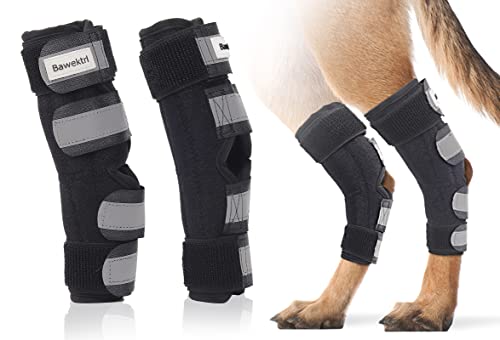
This pair of rear leg braces is designed for the hind legs, focusing on the hock joint with compression and stabilization to ease arthritis symptoms. The braces incorporate metal support springs on each side for improved stability and balance, supporting recovery after injuries or surgeries. The product emphasizes a secure, flexible fit and durability for ongoing use in daily activities and rest periods.
Key considerations: correct sizing is essential; the braces should not restrict natural gait. Regular inspection for wear and tear is advised to maintain optimal support and prevent skin irritation.
MerryMilo Knee Brace For Hind & Rear Legs

The MerryMilo knee brace focuses on stabilizing the knee joint to aid ACL/CCL strains, arthritis, and post-surgical recovery. It features a durable, flexible fabric that remains comfortable for dogs through daily wear, while an adjustable strap system keeps the brace securely in place during walks or vet visits. This option is suitable for dogs needing targeted knee support without excessive immobilization, allowing continued mobility with reduced pain.
Key considerations: ensure a snug fit around the knee area, verify that the brace does not restring movement or cause rubbing, and consider the dog’s tolerance for wearing a brace during extended periods.
Labra Front Leg Brace

The Labra front leg brace is designed to protect and support the front limb around the wrist area. It helps prevent licking of wounds, supports joint health, and aids in recovery from injuries or arthritis. The brace uses 3mm neoprene with a breathable interior, offering comfort and durability for regular wear. It is suited for dogs needing front-leg stabilization and protection against irritation from active licking or scratching.
Key considerations: evaluate the size and fit for the front leg, monitor for heat buildup on longer wear, and ensure the brace remains in place during movement and activity.
Buying Guide
- Sizing and fit: Measure according to the manufacturer’s size chart, paying attention to the exact limb circumference or width. Ill-fitting braces can reduce effectiveness and cause discomfort or rubbing.
- Material and durability: Look for breathable neoprene or fabric blends that balance comfort with support. Durable stitching and secure fastenings (Velcro, straps) improve wearability over time.
- Level of support: Front-leg braces typically address stabilization of carpal joints and wrists, while rear-leg braces focus on hock joints. Some dogs benefit from multi-area support; others need targeted relief for a specific joint.
- Mobility vs. immobilization: Choose a brace that stabilizes the joint without overly restricting natural movement. Consider daily activity levels, walking routines, and veterinary guidance.
- Wound care and protection: If healing wounds are involved, select braces designed to prevent licking and protect sensitive skin while still allowing air flow to reduce irritation.
- Maintenance and care: Check if the braces are machine-washable or require hand cleaning. Regular inspection for wear, loose seams, or torn straps helps maintain safety and effectiveness.
- Usage context: For ongoing arthritis management, opt for a comfortable, easy-to-put-on design suitable for frequent application. For post-surgery recovery, prioritize secure fit and stable support to minimize pain during movement.
- Veterinary alignment: Always consult a veterinarian for appropriate joint support strategies, especially if the dog has a known ACL/CCL injury, arthritis stage, or post-operative needs.
Selecting an appropriate brace involves balancing comfort, fit, and the specific joints affected by arthritis. When used correctly as part of a broader care plan, these devices can aid mobility, reduce pain, and support daily activities for dogs with joint diseases.