Finding a quiet collar for dogs involves balancing humane training with real-world effectiveness. This guide reviews five top options—ranging from ultrasonic and pheromone approaches to traditional training collars—designed to reduce barking and stress while prioritizing safety for pets of all sizes. Each product features multiple settings to tailor the experience to individual dogs, helping households maintain peace without harsh punishments.
| Product | Brand | Key Benefit |
|---|---|---|
| FAFAFROG Dog Bark Collar | FAFAFROG | |
| KJKZO Dog Bark Collar | KJKZO | |
| SLAYKAM Ultrasonic Bark Collar | SLAYKAM | |
| GUIFAG Bark Collar AI Dual-Detection | GUIFAG | |
| Bousnic Dog Shock Collar | BOUSNIC |
FAFAFROG Dog Bark Collar

The FAFAFROG bark collar offers four operating modes with five adjustable sensitivity levels. An easy setup supports both large and small dogs. It features an upgraded smart barking recognition chip that uses two activation conditions: sustained barking and vocal cord vibration, with no remote required. A built-in Protect Mode displays status and power on the digital screen. After six consecutive activations, the device temporarily disables for 30 seconds to prevent over-correction. The manufacturer emphasizes humane, non-punitive training.
KJKZO Dog Bark Collar

The KJKZO collar features a 2026 upgraded AI smart bark system with dual-sensor detection that analyzes both sound and vocal cord vibrations. It claims a 0.1-second response and guards against false triggers in noisy environments. Training modes include three modes with seven adjustable sensitivity levels, enabling owners to customize training from beeps to vibrations or combined cues. This versatility aims to suit dogs of varying sizes and temperaments.
SLAYKAM Ultrasonic Bark Collar

This model uses advanced ultrasonic sound as a primary intervention, reducing barking through non-contact prompts. It claims up to 93.17% barking reduction with consistent use and is designed to function across large, medium, and small dogs. It includes seven sensitivity levels and three correction types, emphasizing a gentle, timing-based approach to training. The device relies on intelligent sound processing to minimize false activations while training.
GUIFAG Bark Collar AI Dual-Detection

The GUIFAG collar uses AI dual-detection (voiceprint and vocal cord vibration) to achieve near-instant 0.001-second responses with minimal false triggers. It offers four smart modes and a variable frequency technology to prevent habituation and response fading. With nine levels of sensitivity, it accommodates dogs of various sizes and barking tendencies. The interface emphasizes ease of use, one-handed control, and clear status indicators on a panoramic color screen.
Bousnic Dog Shock Collar
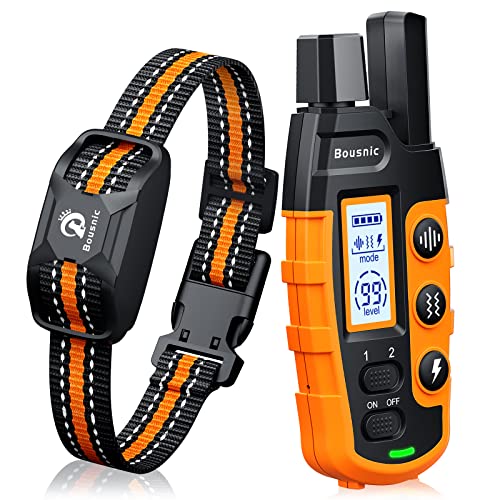
The Bousnic collar provides three training modes—beep, vibration, and safe shock—with adjustable intensity levels. Its 3300-foot range supports outdoor training over long distances and a dual-channel option enables training two dogs simultaneously. Suitable for dogs weighing 5 to 120 pounds, it includes an on/off switch for safeguards against accidental activation. This model emphasizes a broader toolkit for behavior shaping in outdoor scenarios.
Buying Guide: Key Purchase Considerations
- Training goals: Determine whether your priority is reducing barking, managing anxiety, or guiding behavior in outdoor spaces.
- Detection method: Dual-sensor or ultrasonic collars reduce false triggers but may vary in effectiveness by environment and dog breed.
- Safety features: Look for auto-stop or cooldown modes, adjustable intensity, and clear power indicators to protect pets from over-stimulation.
- Size and fit: Choose a collar with adjustable lengths and materials suited to your dog’s size, coat type, and skin sensitivity.
- Battery life: Longer-lasting batteries reduce frequent recharging; consider USB-C or replaceable options if you travel with pets.
- Water resistance and durability: Waterproof or water-resistant designs are important for dogs that swim or play in the rain.
- Training philosophy: Humane options (beep/vibration, ultrasonic prompts) generally reduce stress and are preferred for sensitive dogs.
- Environment considerations: Outdoor training may benefit from longer range devices; indoor use often needs lower sensitivity to avoid nuisance corrections.
- Maintenance: Easy-clean surfaces and machine-washable covers help keep collars hygienic for active dogs.
Across the reviewed options, households should balance effectiveness with canine welfare. Ultrasonic and AI-detection models tend to offer gentler training signals and fewer discomfort-based corrections, while traditional beep or vibration modes provide straightforward feedback. For dogs with sensitive temperaments or living in multi-pet households, adjustable sensitivity and multiple training modes are especially valuable. Always follow manufacturer guidelines and consult a veterinarian or professional trainer if barking or anxiety concerns persist.