Choosing the right saddle for gaited horses requires attention to balance, comfort, and a design that accommodates lateral movement without restricting natural gait. This guide highlights five top Amazon picks that emphasize comfort, secure fit, and durability for gaited breeds such as Tennessee Walking Horses, Paso Finos, and Icelandics. Below is a concise summary of the featured products to help you compare at a glance.
| Product | Brand | Key Benefit | Typical Use |
|---|---|---|---|
| Abetta Gaited Comfort Endurance Saddle 17 Black | ABETTA | Gaited-specific design for comfort | |
| HILASON Flex Tree Western Horse Saddle Cordura Synthetic Trail & Pleasure | HILASON | Flexible tree for better horse-rider balance | |
| CHALLENGER 17″ Western Cordura Trail Barrel Pleasure Saddle | CHALLENGER | Synthetic, lightweight with flex tree | |
| HILASON Western Draft Horse Trail Pleasure American Leather Saddle | HILASON | Ergonomic fit for wider-bodied horses | |
| HILASON 15 in Horse Barrel Trail Pleasure Endurance Synthetic Saddle | HILASON | Endurance-friendly design with robust build |
Introduction alignment: This article presents five gaited-horse-focused saddles with emphasis on fit, comfort, and rider stability. Each section below provides a concise overview, notable features, and usage guidance based on the product description and common gaited-horse saddle considerations.
Abetta Gaited Comfort Endurance Saddle

The Abetta Gaited Comfort Endurance Saddle is designed to support gaited horses with a focus on rider stability and comfort. While compact in product text, the saddle promotes a balanced position for riders who require consistent contact through the gait cycle. The design typically features a comfortable seat and practical rigging suitable for trail and endurance use, making it a versatile option for daily rides and longer outings.
HILASON Flex Tree Western Cordura Saddle

The HILASON Flex Tree Western Saddle features a robust, flexible tree designed to adapt to a range of withers and gaits. Its Cordura and synthetic construction aims for lighter weight and durability, with a seat and leather touchpoints crafted to enhance grip and rider confidence. The design often accommodates horses with broader withers and provides a balance that can support gaited movement during longer rides or day-to-day work.
CHALLENGER 17″ Western Cordura Trail Saddle

The Challenger 17-inch Cordura trail saddle emphasizes a flex tree and a lightweight, fully synthetic build. It’s designed to strike a balance between flexibility and support, with a detachable seat and easy maintenance. This setup can be advantageous for gaited horses where a lighter saddle with a secure, stable seat helps facilitate smooth transitions across gaits on long trails.
HILASON Western Draft Horse Trail Pleasure American Leather Saddle

This draft-style saddle from HILASON focuses on an ergonomic fit for wider-bodied horses, a common requirement for many gaited breeds with broader frames. With hand-tooled leather accents and a supportive seat, it aims to distribute rider weight evenly and reduce pressure points. The design supports stability for riders during extended sessions on diverse terrain and is suitable for horses that benefit from a roomy, comfortable backguard.
HILASON 15 in Endurance Synthetic Saddle
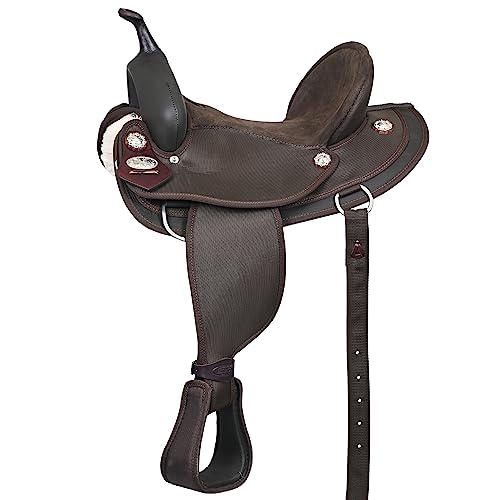
The 15-inch HILASON endurance saddle combines a compact seat with endurance-focused detailing. Designed for gaited horses, the synthetic materials and a robust gullet aim to provide a secure feel without excessive bulk. The saddle balances weight, maneuverability, and comfort, supporting riders through longer rides while maintaining effective communication with the horse.
Buying Guide: Key Considerations For Gaited-Horse Saddles
- Fit to the horse: Gaited horses often have broader frames. Look for saddles with adjustable or wider gullets, ergonomic bars, and sufficient clearance along the spine to prevent crowding during lateral movement.
- Balance and rider position: A stable seat, proper cantle height, and a design that keeps the rider in a centered position help maintain natural movement across gaits. Consider models with flexible trees or contoured seats for better alignment.
- Weight and materials: Synthetic or Cordura saddles tend to be lighter, which can reduce fatigue on both horse and rider. Durable leather options offer classic aesthetics but may be heavier and require more maintenance.
- Durability and tack compatibility: Ensure the saddle accommodates standard rigging, saddle pads, and stirrups. Look for reinforced stitching, quality hardware, and UV- and moisture-resistant finishes for outdoor use.
- Riding goals: For trail riding, endurance, or daily schooling, match the saddle to the intended activity. Endurance-focused designs should emphasize comfort over long distances and support good back health for the horse.
- Pad and protection: Even with a well-fitting saddle, a contoured saddle pad can improve comfort by reducing pressure points and protecting the spine. Consider pads with moisture-wicking properties.
- Maintenance: Synthetic saddles are typically easier to clean and maintain than leather. If selecting leather, factor in conditioning and care to preserve flexibility and longevity.
- Budget and availability: Compare warranty terms, customer support, and availability of replacement parts or accessories when choosing between brands and models.
Overall, the selections above emphasize gait-friendly designs, balanced weight distribution, and durable construction. When choosing, consider your horse’s conformation, your riding style, and how the saddle interacts with gait transitions to help maintain comfort and performance on every ride.